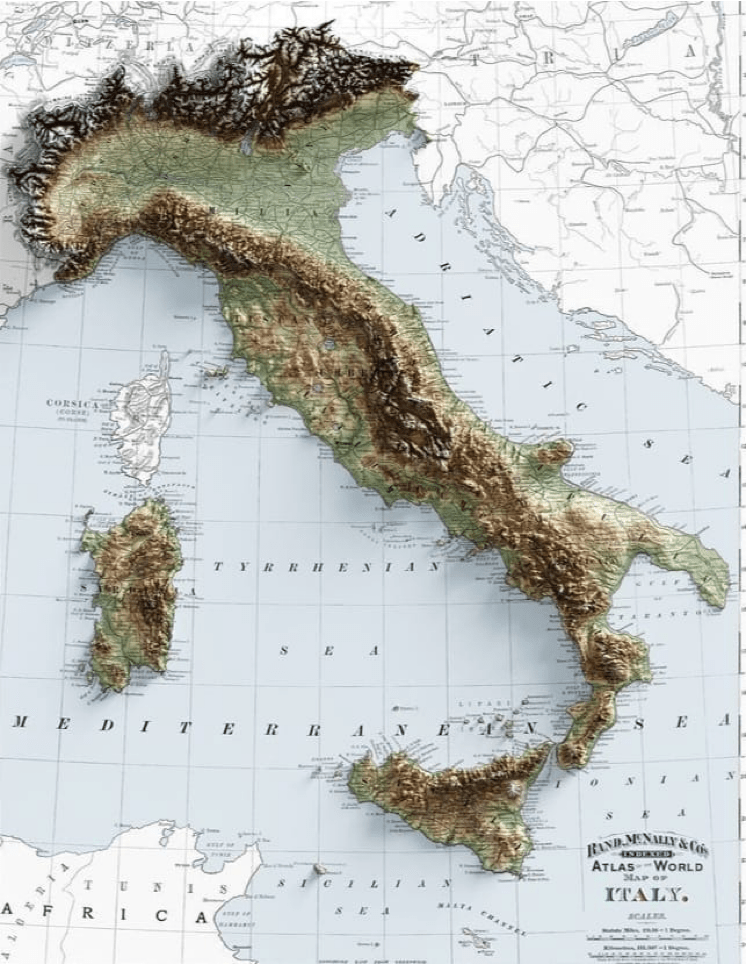
If you look at a map of Italy, you may be surprised to realise that almost half of the country is made up of peaks and mountain ridges. The Val Comino belongs to this lesser-known and still relatively unspoilt Italy: a green and rugged, territory where Lazio, Abruzzo and Molise meet.
This pie is a delicious example of the cooking of the area and I learnt it years ago from one of my favourite Italian cookery blogs, www.aaaaccademiaaffamatiaffannati.blogspot.com.
The pastry is made using white wine and olive oil and it has become my go-to for savoury pies and tarts. It comes together easily and it is a joy to eat. In the filling, courgettes meet capers, olives and sultanas, hence a sour-sweet result and irresistible.
In the original version, preserved anchovy fillets are chopped together with the capers and olives, but over time I have come to prefer the pie without them and this is the recipe I describe here. It makes this pie accidentally vegan, obviously.
Pizza di zucchine della Val Comino (Courgette pie from the Comino valley, in southern Lazio)
8-10 portions
For the filling:
1.2 kg courgettes, sliced about ½ cm thick. If they have perfect flowers, use them too, cut up in ribbons
2 cloves of garlic
Coarsely chopped parsley, mint and basil, about 25 g each
60 g capers, rinsed
60 g pitted black olives, anything you like to eat (I favour Taggiasca olives from Liguria)
60 g sultanas (or currants or raisins)
For the dough:
450 g Italian 00 or plain flour
50 g wholemeal or rye flour
a pinch of salt
150 g white wine
100 g olive oil
A round tin with a slanted wall and wider at the top: 31 cm top x 28 cm base x 4 cm height, well oiled.
To make the dough, mix the flours, salt and set aside.
Pour the wine and oil in a roomy bowl and whisk together. Gradually add the flour, mixing until you obtain a soft dough. You may not need all the measured flour.
Cover and let the dough relax for about twenty minutes.
Check the dough: it should be soft, pliable but not sticky. Add extra flour or extra wine, if needed. You are aiming at an “earlobe consistency”.
Knead it for about five minutes.
Cover and let it rest for 30 minutes.
You could also make it in a food processor, starting with most of the flour and then adding the liquids.
For the filling: add the courgettes and garlic to a large frying pan, drizze with a couple of tablespoons of oil and salt lightly. Mix and cook, covered, and on medium heat, until the courgettes are tender but retaining a slight bite. Remove from the heat and fish out the garlic.
Coarsely chop the capers and olives together and add them to the courgettes.
Stir in the herbs and sultanas.
Mix well and let cool, uncovered.
Check the seasoning before using, when cold.
Pre-heat the oven to 160°C, convection.
Divide the dough into two pieces, one two- thirds bigger than the other.
Roll out the larger piece between two sheets of parchment paper. Line the tin with it, making sure some dough overhangs the rim.
Prick the base with a fork and add the filling.
Roll out the smaller piece of dough in the same manner and place it on top of the pie. Firmly press the two disks of dough together to seal them and to thin out the joint.
Trim the excess dough with scissors, leaving just enough dough to be able to roll it inward and form a not-too-thick edge.
Brush the top with extra oil, sprinkle with flakes of salt and prick it with a fork to allow steam to escape.
This pie needs long and slow cooking: bake it for about 1½ hour, covering the top if it begins to darken too much. The pie should be a deep golden colour when done.
After the first twenty minutes, remove the pie from the oven and snip the rolled in rim with scissors held at a 45 decree angle: this will make it prettier and, more importantly, less substantial to eat. But if you think this is too fiddly, just leave it.
Return the pizza to the oven and continue baking.
When the pizza is done, let it cool completely before serving it.
t is even better the following day.
Notes
This Southern Italian dough is made according these proportions:
one part flour : half part liquid
the liquid being more than half white wine, less than half olive oil.
Sometimes, I use a little durum wheat flour too in the mix, no more than 20% of the total flour amount. In the original recipe, white flour only is used, but I think a little wholemeal flour makes for a better pastry.
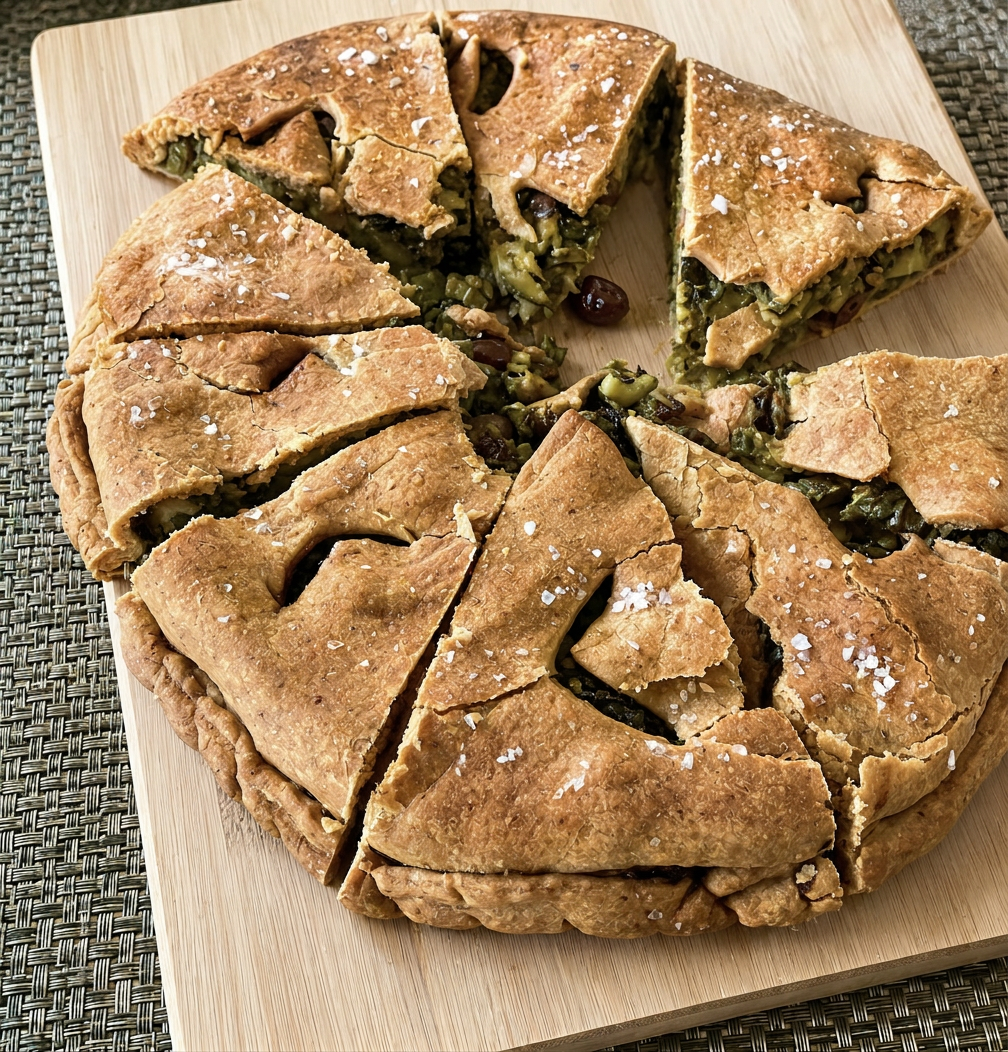
NB: my original photo was edited with AI

 Italian home cooking
This sounds lovely, Stefano! I know I’d like it just by reading the ingredients list. And because it’s actually very close to a savory pie that the Apulian side of the family used to make. Just switch out the zucchine for onions (and add back the anchovies).
I may try to make this this week if I have time before we leave on a short trip. If not, definitely after we get back.
LikeLike
I think, pies similar to this one are being made all over in that corner of Italy. What made this recipe interesting, the first time I tried it, was the dough, which uses a fairly substantial amount of oil and wine (over 500 g flour, one needs, 100 g oil and 150 g whine, more or less; the other similar doughs I worked with, were always leaner).
LikeLiked by 1 person
This looks amazing, Stefano — I know Mark will love this so I am hoping to make it while zucchine are in season (now). Thanks for sharing the recipe! Like Mad Dog, I will most likely return the anchovies and capers ot the dish, though the vegan version is still so appealing.
LikeLike
sardines reign for ever!
LikeLike
Ciao Stefan e grazie. In London it is the same: bland courgettes, generally the dark ones (the worst type, imo). Here in Lucca , I tend to cook with the light greens ones, which are sweeter. On mint: the weight is net and according to my notes it is what I used BUT in this kind of cooking, one should really follow one’s taste and in the old days, they would use “a handful of this, a handful of that”. I like the minty flavour, but do feel free to use whatever you have
Nice to hear from you. S
LikeLike
That looks delicious, though I will probably make the original version with anchovies. I can’t help being reminded of Galician empanada pastry, which is also made with olive oil and wine (or cider). I came across a French octopus pie a few years ago – Tielle à la Sétoise, made by Italian immigrants to the town of Sète, which even looks like that anchovy pie (and it looks like she cooked it in a paella pan). After some investigation, I discovered that the Italians in Sète (via French Wikipedia) are cooking a type of empanada, relative to the Spanish rule of the Kingdoms of Naples and Sicily. Thanks for the inspiration!
LikeLike
I really liked empanadas, when I made them (I think from Roden’s Spanish book mainly).
I have read your piece: a good one. I particularly like how you were introduced to slow Spanish rhythms of eating, chatting, smoking… in the Portobello Road!. Very multicultural London.
I love octopus but it has been on my “no eating” list for years now, for ethical and environmental reasons. Do I still miss it? yes, big times, but…
To this day, if you go to some Italian southern regions (Puglia, Abruzzo, some parts of Lazio), you will easily come across “tielle”: the name stands for both the terracotta cooking vessel and for the dishes cooked in it; a famous version is “tiella riso, patate e cozze”, where raw mussels are layered with rice and potatoes.
LikeLike
Thanks Stefano, I have made tielle with raw mussels – it takes an age to remove them from their shells, but tastes amazing when cooked!
LikeLike
you are way more deft with selfish than I am… but now you are tempting me! 🙂
LikeLike
The next time I make it, I think I’ll steam the mussels first!
LikeLike
Love this recipe! When I saw the photo, I thought it was erbazzone. The courgettes available here unfortunately don’t have a season, they come from greenhouses year-round. The organic ones are ok-ish. And it it’s either that or none at all. They never come with flower attached.
Are you sure about the 25 grams of mint? Is that the weight with or without stems? Even if weighed with stems, the mint would overpower everything? Interesting that this is called a pizza.
LikeLike