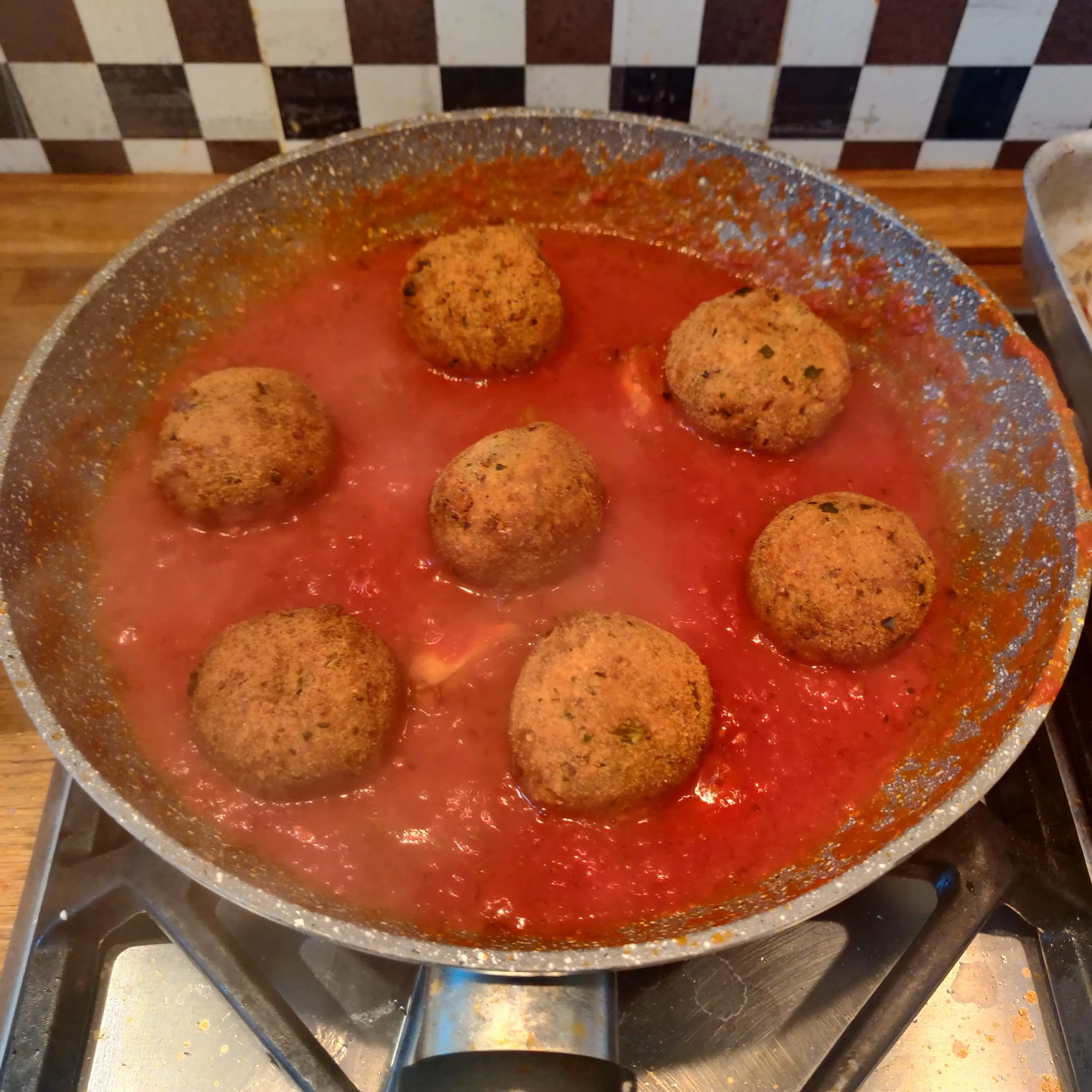
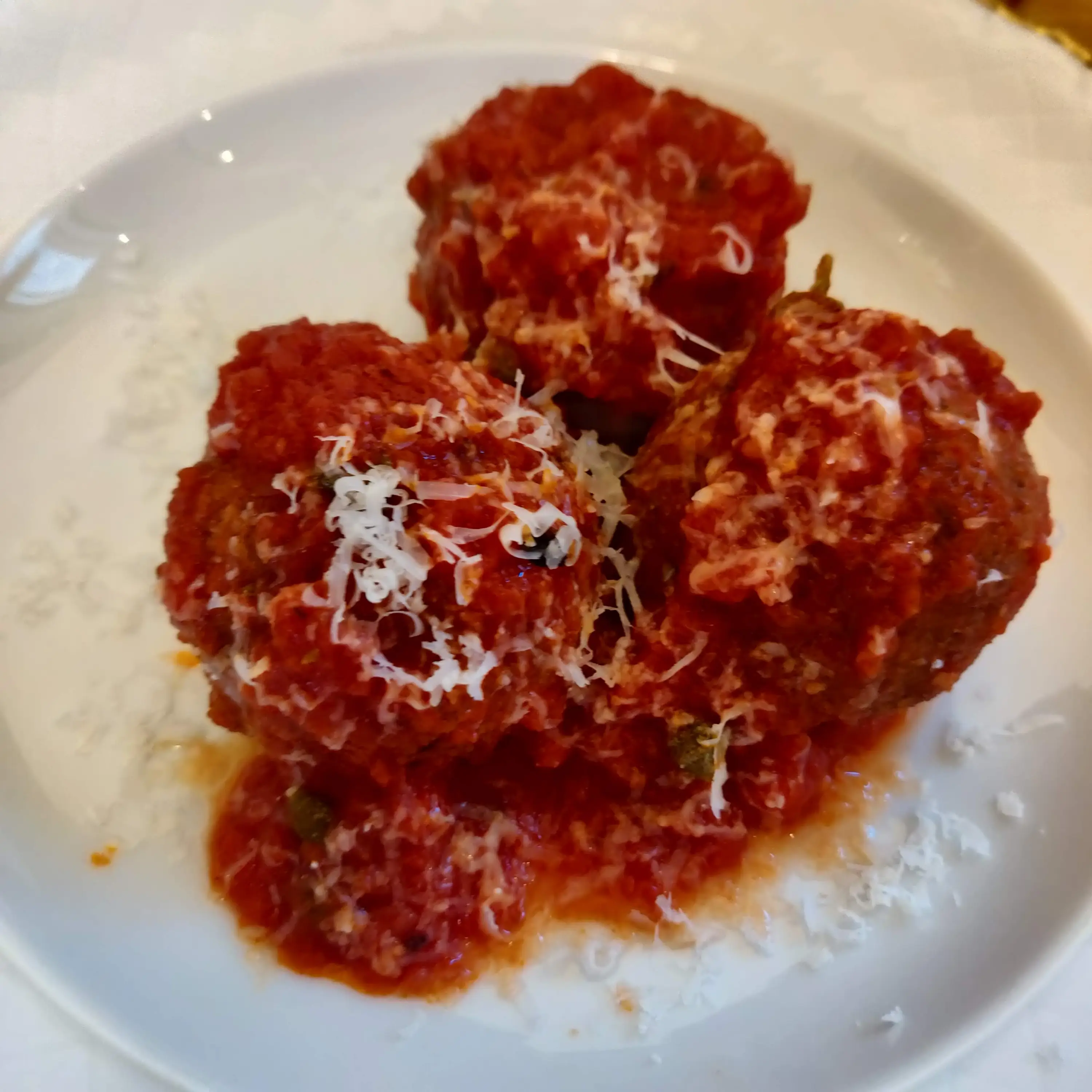
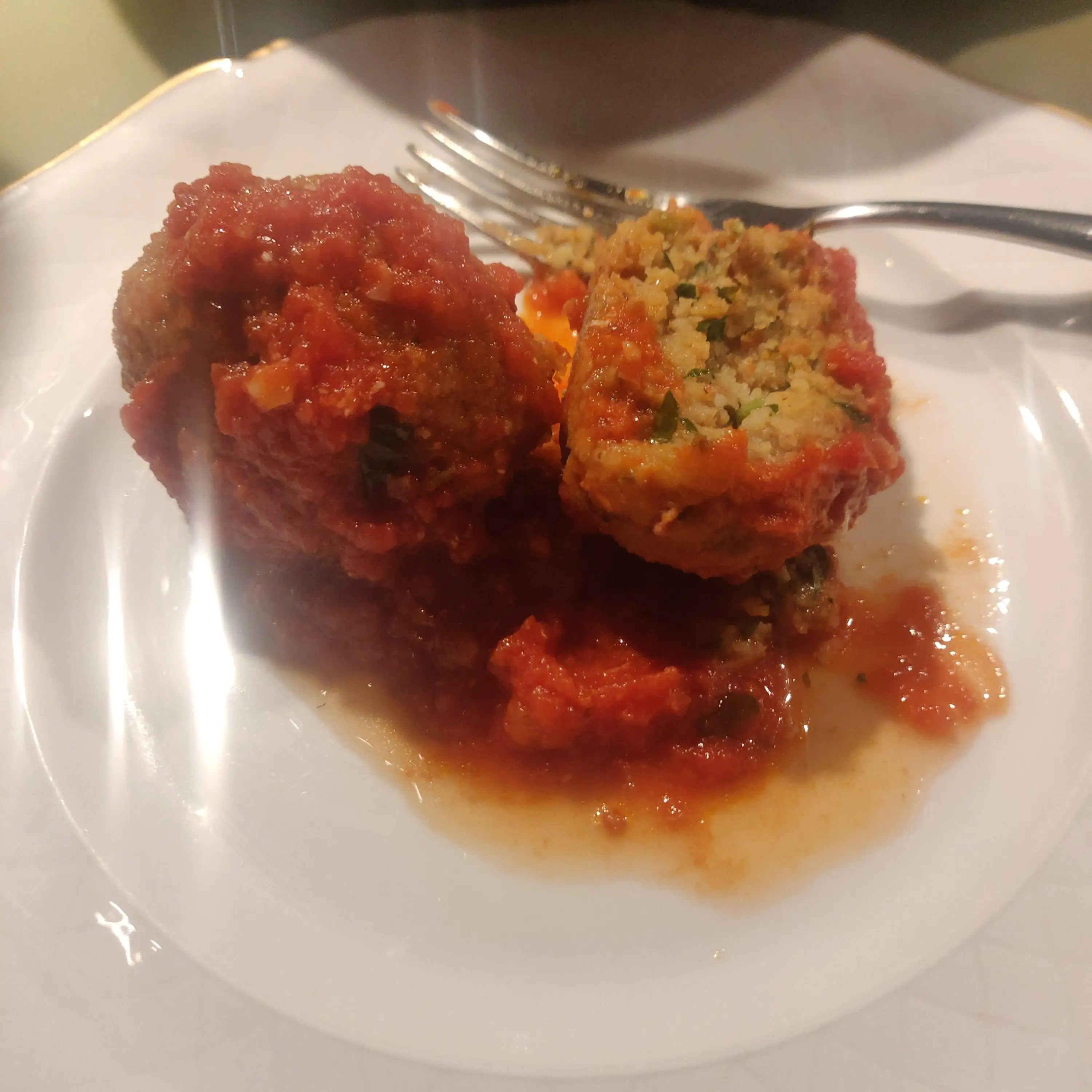
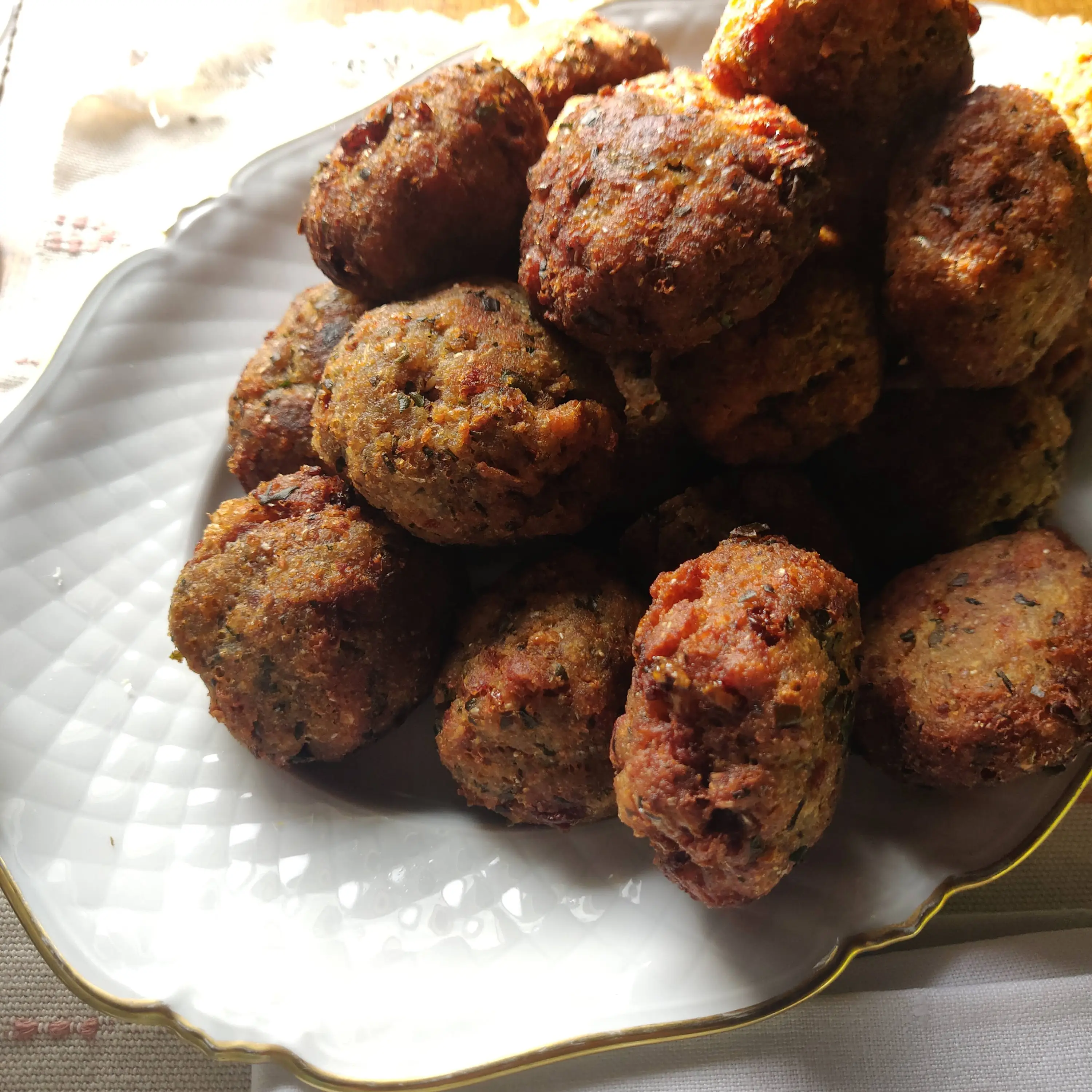
Polpette di pane – bread polpette or breadballs, if you insist

Lucca, June 2022 .
London, August 2022. This has been the best, most rewarding recipe of this summer. Just love it

I am a bread collector. All those stale loaf-ends (apparently called “the heels”) that cannot be eaten but cannot be turned into breadcrumbs either, I put aside – “I will make a bread pudding or a pancotto, an Italian bread soup”, I solemnly declare. P and Lucia roll their eyes, because they know their chickens: often these grand plans are not acted upon and, after weeks of ignoring it, I bin my bread, with a bad conscience.

This time, I looked at my collection of odd ends of bread and I decided to make polpette di pane, bread polpette and what an inspired decision that was. Over the last month I have cooked them a few times, actually buying and collecting bread with this purpose in mind. 

Continue reading “Polpette di pane – bread polpette or breadballs, if you insist”

Miascia (Bread, grape and rosemary cake from Lake Como)

Miascia (mee-AH-sha) is a bread cake typically found in the lovely villages dotting Lake Como. It is an impromptu cake, made with cheap ingredients: stale bread, milk, some fruit, fresh or dried, polenta flour, sugar, a little chopped rosemary to give an elusive perfume. Nothing fancy and yet the final result is truly delicious. The bread is soaked in milk and then fruit is added, with very little flour to bind. This creates a lovely custardy texture that contrasts well with the crunchy topping. Continue reading “Miascia (Bread, grape and rosemary cake from Lake Como)”

Notes on panzanella

panzanella

Panzanella

On a hot, summer day in Lucca, few places are more agreeable to have lunch at than under the stone arches of the old trattoria Da Giulio, well protected from the gaze of the sun. The menu never changes (dreary to be a chef there, one would have thought) and the food is solid rather than exceptional, but the combination of decent food, smiling service, reasonable prices and perfect location, makes this place dear to its many customers. I generally stick to the usual summer suspects: either pappa al pomodoro or panzanella, both stalwarts of Tuscan cookery. The former is a a thick bread and tomato soup served at room temperature; the latter a salad of crumbled stale bread, tomatoes and red onions.

Continue reading “Notes on panzanella”

Pan mejino o pàn de mèj o pàndemèinn Pan di miglio/Elderflower and polenta cake from Lombardy

Pan de mej - elderflower and polenta cake

This is an old treat from Lombardy, now, alas, almost extinct. Originally, “pan de mej” were crinkly yellow flat biscuits made with millet flour (“mej” in the Lombardy dialect and “miglio” in Italian) and flavoured with chopped dry elderflowers; over the course of the centuries the millet has been replaced by polenta flour, but chopped elderflowers have remained a key ingredient. These biscuits were traditionally eaten on the day of San Giorgio, the 23rd of April, dunked in single cream: in Lombardy, San Giorgio was hailed as the patron saint of milkmen and, in long gone days, the 23rd of April was when milk supply contracts were renewed. I can vouch for the excellence of the combination of warm pan de mej and cold single cream. In my version, I follow Anna del Conte’s lead and bake a cake instead of biscuits and I use fresh elderflowers. This is a dry cake, exquisitely perfumed, whose restrained elegance and goodness should be revived. Continue reading “Pan mejino o pàn de mèj o pàndemèinn Pan di miglio/Elderflower and polenta cake from Lombardy”

Porrata o torta di porri – leek pie from Tuscany via Frank

porrea - torta di porri - leek pie

This is porrata or torta di porri, a leek pie – porri means leeks in Italian.

I learnt it from one of my favourite websites: Memorie di Angelina, written by Frank Fariello and chock a block with great authentic Italian recipes. In turn, Frank learnt it from Giuliano Bugialli and Bugialli claims it to be of Tuscan origin. Continue reading “Porrata o torta di porri – leek pie from Tuscany via Frank”