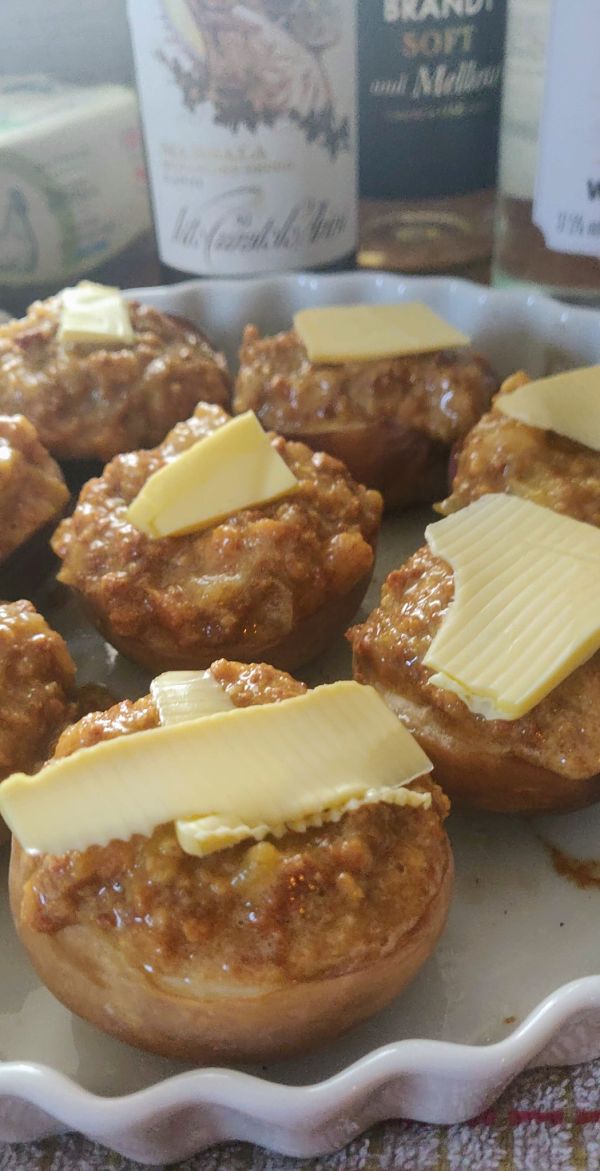
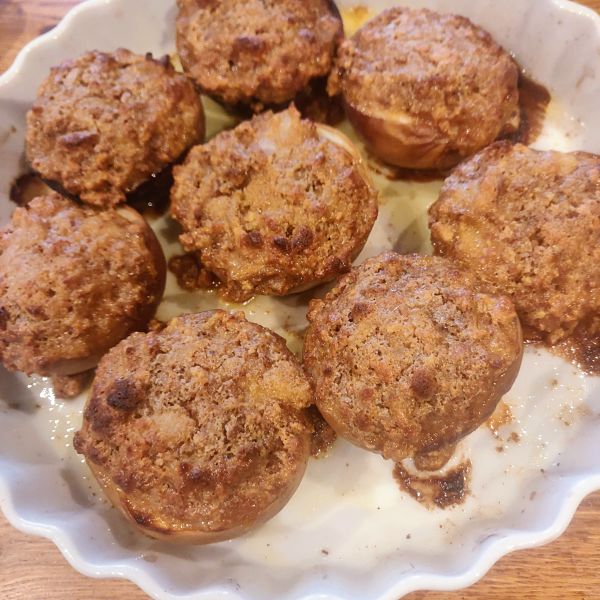
One of the most classic and classiest desserts of the Italian repertoire, from Piemonte: peaches, stuffed with amaretti biscuits mixed with liqueur, then roasted. I prefer not to include the customary cocoa powder in the filling, because I feel it overpowers the delicate peach flavour, but if you like the idea, just add a tablespoon to the mix. I also prefer to roast the peaches before stuffing them – this makes them creamy tender, the way I like it. Eat it warm.
This lovely dessert works well also with the lustreless peaches we often get here in the UK and it is the loveliest farewell to summer.
Torta di polenta con pesche e lamponi (polenta, peach and raspberry cake)


One of those incredibly simple, almost ingenuous, but delicious Italian cakes that can be rustled up in five minutes, in just one mixing bowl and that everyone loves.
Continue reading “Torta di polenta con pesche e lamponi (polenta, peach and raspberry cake)”Torta langarola di nocciole (Hazelnut cake from the Langhe area, in Piedmont)


The hazelnut is not an ingredient one immediately associates with Italian cookery, yet they are definitely rooted in our food culture: or instance, I have never come across a gelateria that does not have nocciola (hazelnut) flavour, one of the best actually (and, as you know, gelaterie are everywhere in Italy), you can often spot a roasted hazelnut atop pasticcini, the diminutive Italian pastries, and biscuits, a signal that what you are going to taste contains the nuts. There is Frangelico too, a hazelnut liqueur from Piemonte that can elevate anything it is drizzled over to new heights, and, well, then there is Nutella, one of the most famous Italian foods, a mix of chocolate and (not so many) hazelnuts and other, more or less, insalubrious ingredients. If you travel to central Italy, in particular in the Tuscia region of Lazio and in Umbria, you will see vast, intensively cultivated hazelnut groves, which contribute hugely to the local economy but that are also cause for concern. What was once a minor crop has become very important, to the point that Italy is now the world’s second-largest producer, for better or worse. Here an article in Italian too.
Continue reading “Torta langarola di nocciole (Hazelnut cake from the Langhe area, in Piedmont)”‘Ndunderi di Minori, nella costiera amalfitana (ricotta gnocchi from Minori, on the Amalfi coast)


A rather difficult name for an easy peasy pasta: ‘ndunderi are ricotta and pecorino cheese gnocchi from Minori, on the Amalfi coast. These cheesy morsels are firmer than potato gnocchi but positevly tender and are a cinch to make. They go back centuries: in fact they are said to be deriving from the little pasta balls of farro flour (spelt) and soured milk that the ancient Romans used to make. Continue reading “‘Ndunderi di Minori, nella costiera amalfitana (ricotta gnocchi from Minori, on the Amalfi coast)”
Garibaldi biscuits – An illustrious Italian heritage for a quintessentially British biscuit


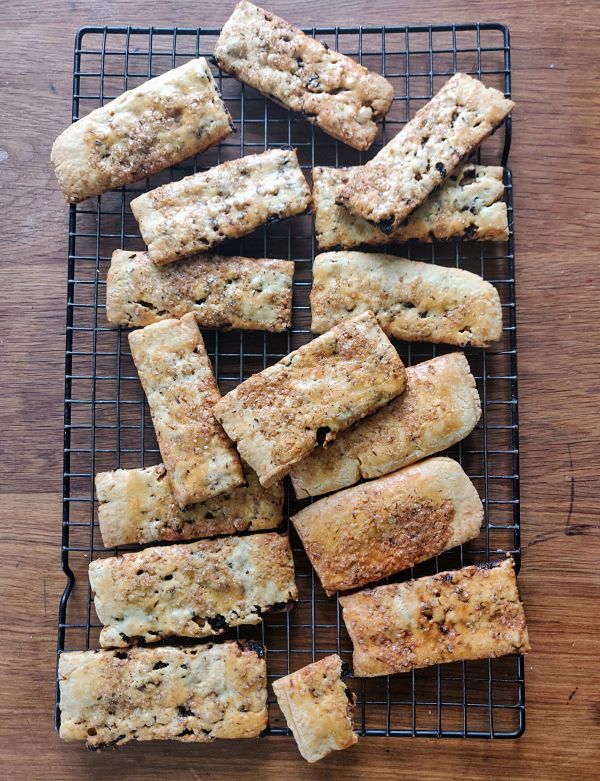
In 2011, there were 4,247 streets and squares named after Giuseppe Garibaldi (1807-1882), out of 7,904 Italian municipalities; I have never been to an Italian city, town, hamlet that does not have a piazza or a via or a viale (a boulevard), named after him. The whole country is dotted with statues and busts of the bearded general, often on a horse, sporting a poncho and brandishing a sword, or with a kerchief tied around his neck and an exotic smoking cap covering his medium-long hair – an ageing dandy, who could now easily grace the cover of Vogue.
Continue reading “Garibaldi biscuits – An illustrious Italian heritage for a quintessentially British biscuit” Italian home cooking