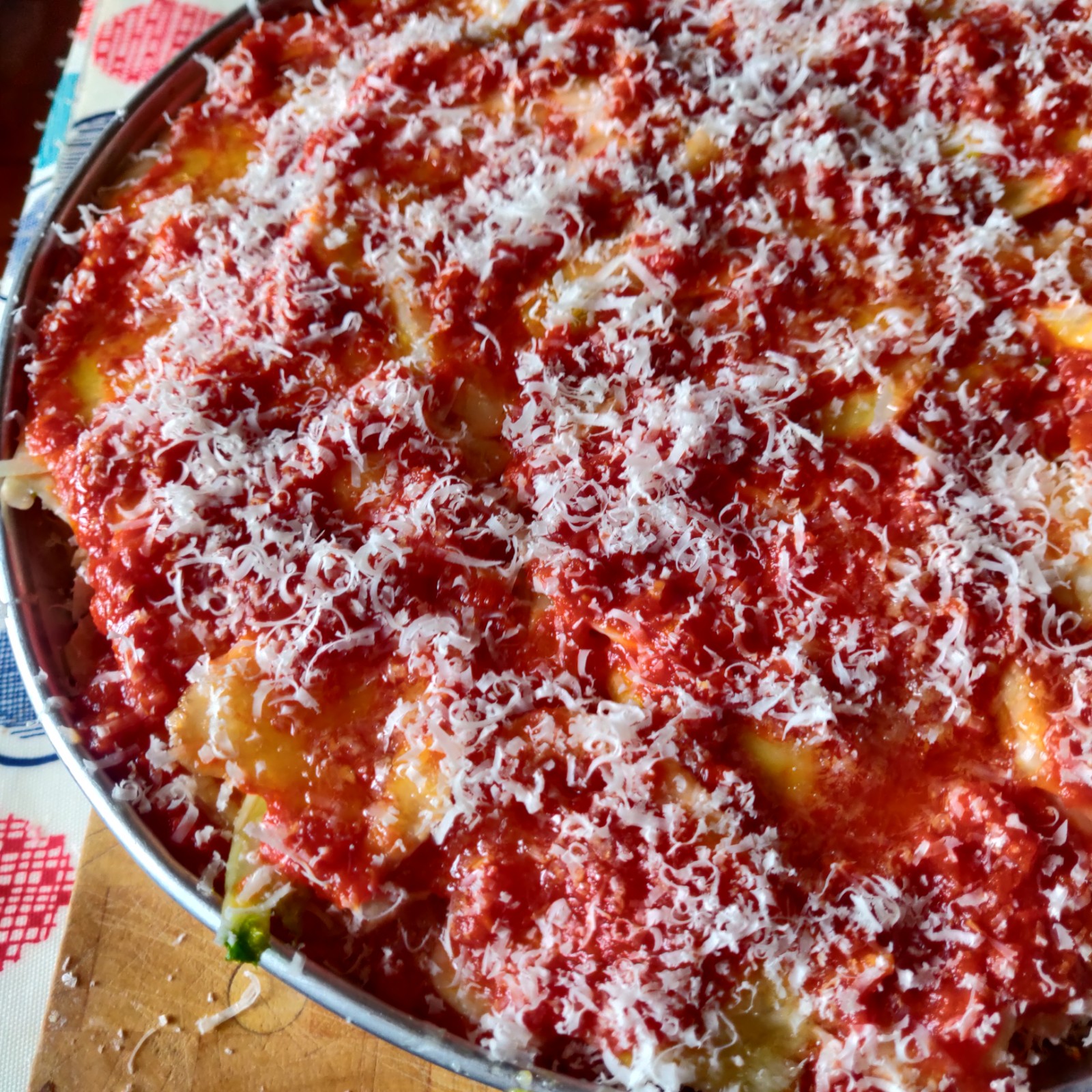
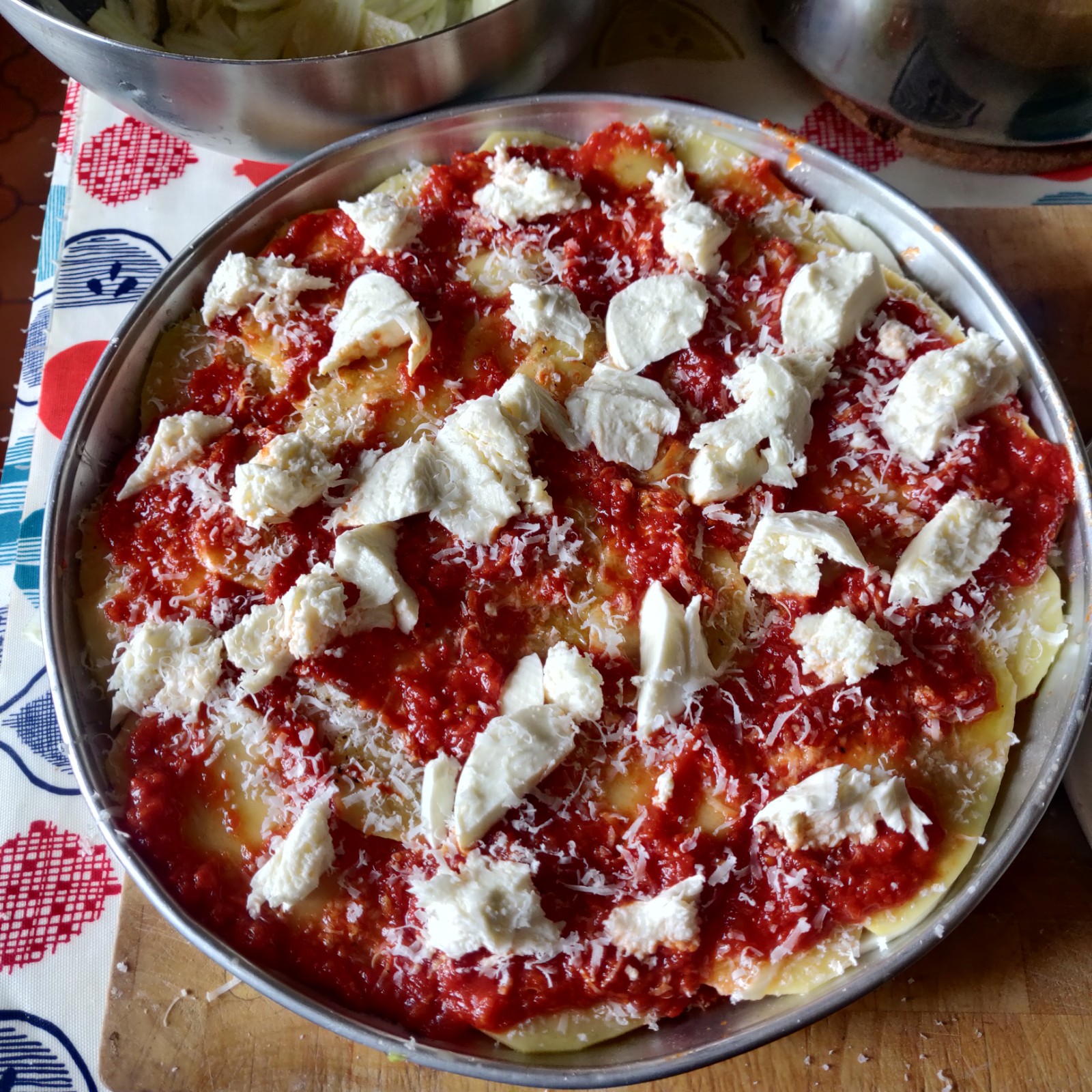
“Pasta china” is the name of a sumptuous, festive, baked pasta dish from Calabria, the heel of Italy, in the deep south. In the local dialect, “china” stands for the Italian adjective “piena”, full, and that’s exactly what this dish is about: a riotous affair of short tubular pasta dressed with a spicy tomato sauce, layered with marble-size meatballs, gooey cheese, crumbled boiled eggs, spicy Calabrese sausage, grated parmigiano and pecorino. Definitely, one of those Southern Italian dishes where restraint is out of the question.
On a hot, summer day in Lucca, few places are more agreeable to have lunch at than under the stone arches of the old trattoria Da Giulio, well protected from the gaze of the sun. The menu never changes (dreary to be a chef there, one would have thought) and the food is solid rather than exceptional, but the combination of decent food, smiling service, reasonable prices and perfect location, makes this place dear to its many customers. I generally stick to the usual summer suspects: either pappa al pomodoro or panzanella, both stalwarts of Tuscan cookery. The former is a a thick bread and tomato soup served at room temperature; the latter a salad of crumbled stale bread, tomatoes and red onions.
Mid April and spring has not made its mind up yet. Days can be stunning, with blue skies dotted with clouds but it is still cold. Yesterday evening we made a fire. In shops and at the market one can find spring vegetables (peas, broad beans, artichokes)and winter bitter greens, leeks and fennels. April really is the time of the year when winter and spring shake hands.
In Campania, no Easter would be conceivable without pastiera, a wonderful cake that exemplifies Southern Italy cooking at its best. It is decadent, generous, refined and simple at the same time. A rich and crumbly pasta frolla (sweet pastry), plump soft wheat berries cooked to a cream in milk, sweet snow-white ricotta, eggs, exotic orange flower water, and bright candied citrus peels that bring the sunshine of the costiera into your home. Impossible to resist – but then why should you? Continue reading “La pastiera (Easter Neapolitan sweet pie with wheat and ricotta)”→
Don’t be fooled by the title – this recipe is actually meatless. I do not know much about Sardinian food and cookery, but whenever I browse through books on the subject, I am surprised by how often (and how creatively) mint comes up in recipes – a herb not generally associated with Italian cooking. This recipe makes the point and it has become a favourite. It is modelled on the way tripe is often cooked in Sardinia, with tomato sauce, mint and sharp pecorino, but with butternut squash taking the lead role.
Mint can be bossy and it is here kept in place by two equally strong flavours: peperoncino and pecorino cheese. They all play big, loud sisters to the quiet butternut squash, which, nonetheless, manages to retain its sweet identity. An excellent, beguiling dish based on contrasts and yet very harmonious. A discovery.
3-4 portions
600g butternut squash, peeled and sliced into half cm slices (net weight) One large clove of garlic, finely chopped A generous pinch of peperoncino 1 x 400g can of crushed tomatoes, plus half its volume in water 50g grated, aged pecorino, plus extra at the table 2-3 tablespoons chopped fresh mint leaves
Shallow fry the butternut squash in olive oil. Cook the slices until tender but still holding their shape (because they will undergo further cooking). Drain on kitchen paper and salt them. If there is still a lot of oil left in the pan, remove it bar a couple of tablespoons, otherwise add some. Add the garlic, the peperoncino and stir, watching them with an eagle eye because the pan will be hot and the risk of burning the garlic is high. When the oil is fragrant and garlicky (which will happen almost immediately), add the tomatoes and the water. Stir and salt lightly: you will add salty pecorino later on, hence go easy. Simmer uncovered for ten minutes. Add the pumpkin and simmer for about extra five minutes, turning the slices in the sauce: some will break up and that’ s fine. Add the pecorino and the mint and stir again, as gently as possible. Rest for 5 minutes and serve, passing extra cheese at the table.
The dish can be made in advance, but it will thicken as it sits: add some water to bring it back to a looser consistency, when you reheat it.
Notes
Ideally you want a sharp, crumbly Sardinian or Tuscan pecorino, but pecorino romano works too and this is easier to find here in the uk.
According to my Sardinian friend and great chef Andrea, this dish works well also without the cheese.
Non traditional as it is, I might be tempted to add, just prior to serving, some coarse, crisp breadcrumbs, fried in oil.