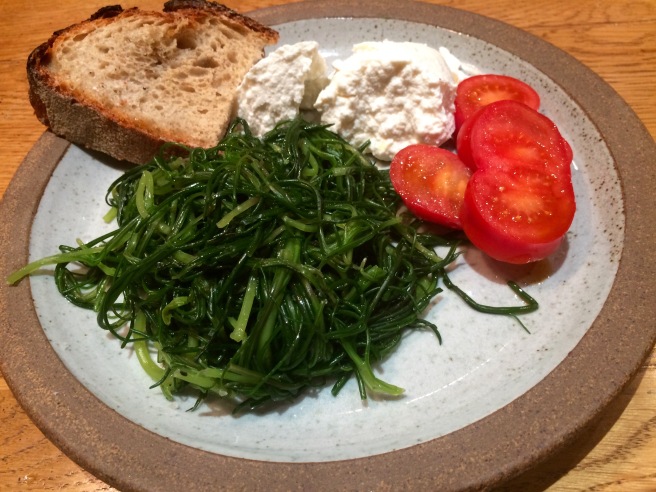
Barba di frate olio & limone (friar’s beard or agretti salad) – spring, Hip hip hooray

barba_di_frate

Finally! The daffodils in the park, the camelia & the magnolia down in the garden, the birds cheerfully chirping away in the morning.. spring!! … AND I found barba di frate (also called agretti) at one of my local semi-posh greengrocers (Newington Green Grocers-reccomended).

Barba di frate a.k.a. friar’s beard or agretti, is a green, slender vegetable, that looks like over-grown chives and tastes a  bit like spinach and sorrel, but with a more metallic, mineral undertone. It is slightly bitter and also acidula ( a tiny bis sour, but on the pleasant side of sourness).
It has a very short season between March and April – it is one the real harbingers of spring, alongside forced rhubarb and nespole . Continue reading “Barba di frate olio & limone (friar’s beard or agretti salad) – spring, Hip hip hooray”
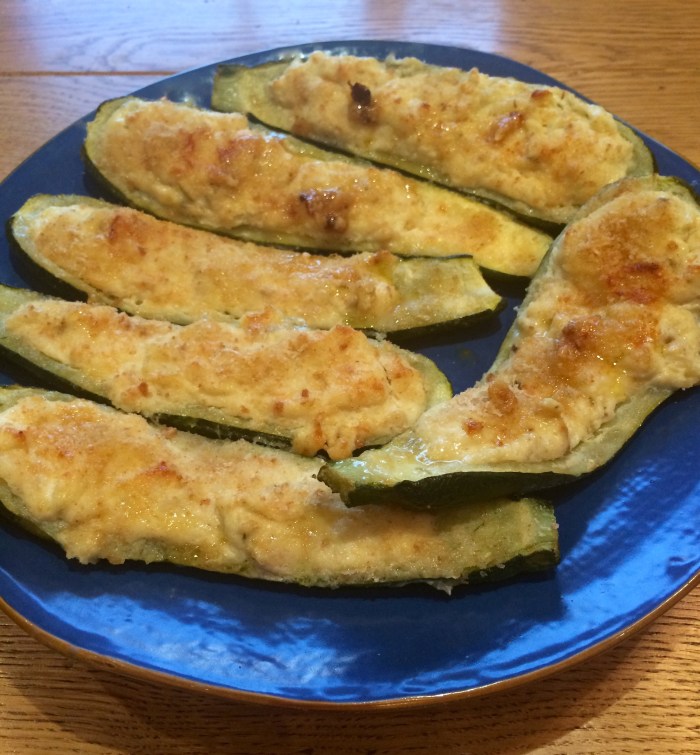
Zucchine ripiene con ricotta e amaretti (Courgettes stuffed with ricotta and amaretti)

img_2323

A delectable recipe from one of the best books about Italian food written in English Secrets from an Italian kitchen, by the wonderful Anna Del Conte. If you want to learn how to cook Italian, grab any book from Del Conte, one from Marcella Hazan and you are sorted for life. Continue reading “Zucchine ripiene con ricotta e amaretti (Courgettes stuffed with ricotta and amaretti)”

Ricotta al caffè (coffee ricotta cream and tips on home-made “ricotta”)

img_2310

Update 2023: here in London, we can now buy fairly good cow ricotta, freshly made every day from Eataly, in Bishop’s gate. I can also recommend sheep ricotta made in Yorkshire by Yorkshire Pecorino (they deliver nation wide). If you live in London, you can order sheep ricotta from Sicily (giving plenty of notice)  from my local Italian deli  in Highbury Barn, called Da Mario. Having said all this, I still prefer to make my almost ricotta when I need it and occasionally I succumb to the supermarket variety.

_____________________________________________________________________________

One of the foods I miss most from Italy is fresh ricotta – the real deal of course, not the  industrial type which I can get also here, a tasteless and pappy substitute. Fresh ricotta is another thing altogether: sweet, milky and light, creamy and yet not insubstantial: with a sprinkle of sugar or with a drizzle of olive oil, it is culinary nirvana. Here in the UK, even in London, fresh ricotta is still very hard to come by: I tried the Neal’s Yard’s one (made in England) and I was not impressed, but I also saw beautiful looking Italian fresh ricotta at Gastronomica, in Borough Market (I was told it is flown in every few days).

Because it’s so hard to find good ricotta in the UK, many years ago I started making “home made ricotta” – though it is actually nothing more than fresh cheese: milk coagulated with some acid (lemon juice, vinegar, rennet, citric acid the most common) . Continue reading “Ricotta al caffè (coffee ricotta cream and tips on home-made “ricotta”)”

Battuto di lardo, aglio e rosmarino (whipped lardo with rosemary and garlic)

622px-Pezzi_di_lardo_di_Colonnata.jpg

Lardo is one of the most delicious of Italian salumi. It is pork hard back that has been cured with salt and flavoured with herbs, garlic and spices. You can spot it in any good salumeria, the typical Italian delicatessen: it comes in large, squat slabs smothered in salt, pepper and herbs and almost marble white within. Lardo has a sweet, mellow, delicate porky flavor and a melt-in-your mouth, satiny, luscious texture. Continue reading “Battuto di lardo, aglio e rosmarino (whipped lardo with rosemary and garlic)”

Pàn de mèj (Elderflower and polenta sweet buns from Milan)

It is elderflower time now in England: on a sunny day if you come across elderflower bushes, you are hit by their unmistakable, intensely floral, sweet smell. Sambuco (elderflower) is the star ingredient of these very old, crumbly, perfumed Milanese buns, centuries ago  made with millet flour, later with corn (polenta) flour.  Traditionally, in Milan until the post First World War years, pàn de mèj buns were eaten on the 23rd April, St George’s day, the patron saint of lattai, milkmen. On that day, lattai used to offer single cream to their customers,  knowing that they would later on customarily pour it over the pàn de mèj . Continue reading “Pàn de mèj (Elderflower and polenta sweet buns from Milan)”