Caponata di sedano – celery caponata

Caponata di sedano

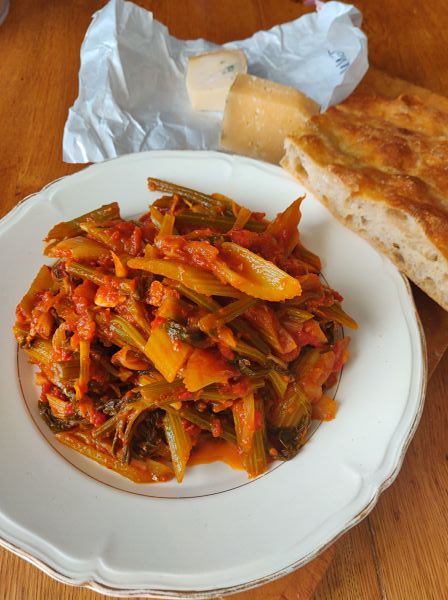
Celery is one of the main ingredients in the classic summer aubergine caponata.  Few days ago, I thought of making it the protagonist, foregoing the aubergines (not in season now, of course) and the result was excellent

Please read my post on caponata first. This is just a note to myself, not to forget this dish

First I made the sauce from my caponata recipe.
Meanwhile I stringed a large bunch of celery (whichI  had placed in cold water for few hrs).  I then cut it up in thickish slices.

When the sauce had simmered for about twenty minutes, I added the celery and let it cook, uncovered, stirring occasionally.

The caponata di sedano was rested for 24 hrs and eaten the following days. Delicious.

Update December 2024:
For a large bunch (Italian supermarket size, with leaves) I made x 2 caponata sauce and the result was very good, more like a chutney (pls read below); the sauce was well reduced before adding the celery;

Spices: I (erotically) used the spices for Neapolitan rococo biscuits, and the result was very good;

On (over) cooking the celery: I did overcooked the celery; the following day, when the caponata was good, I decided to chop it up coarse lay – this was smart and transformed the dish in a sort of chutney; I WONDER IF/NEXT TIME: maybe it is better to simply blanch the sliced celery in boiling water and refresh it, then add it to the simmering sauce for few minutes only …??

On cutting the celery: perhaps, slicing the celery not too thickly is actually better

Sedano al pomodoro – celery braised with tomatoes

braised celery


Until few yrs ago, I never though much of celery. Of course, it is one of the key ingredients of the classic battuto (generally equal quantities of chopped onions, chopped carrots, chopped celery), the basic of so much Italian cooking (fried in some fat, it becomes soffritto) and it is often served raw in pinzimonio, that is to say with other raw vegetables, to be dipped in the  best olive oil. Apart from this,  edano (celery) was a stranger to me. Moreover, I had always associated celery with the cold months only. Continue reading “Sedano al pomodoro – celery braised with tomatoes”

Focaccia

Focaccia is one of the most famous Italian food. Here in the UK it can be found in many more or less artisanal bakeries and even in supermarkets. It is seldom good generally far too high and dense. Focaccia is  one of the most satisfying baked goodies to make at home: it is relatively easy and highly rewarding in terms of taste and texture.

This is one of the best focaccia recipes I have tasted in a long time. Its secret lies in the generous amount of oil and white wine in the dough. It is these ingredients that give this focaccia a full flavour, even if there is also a biga at work here. The inspiration came from Carol Field’s Focaccia book (via another splendid book: Recipes from Paradise, by Fred Plotkin), but I have consequently developed my own version, which I prefer. I have dramatically reduced the yeast and increased the time for the biga, from 1 hour to 12-14 hrs. I have also introduced 10% wholemeal flour, which I think gives the focaccia a more interesting crumb. Carol Field’s recipe uses white flour only and it is done and dusted over few hours (and it is very good, see notes), my version is over two days and I think it is even better. Continue reading “Focaccia”

Pici, pinzi, umbricelli, strangozzi, lunghetti, ciriole, serpentelli: an eggless pasta from central Italy

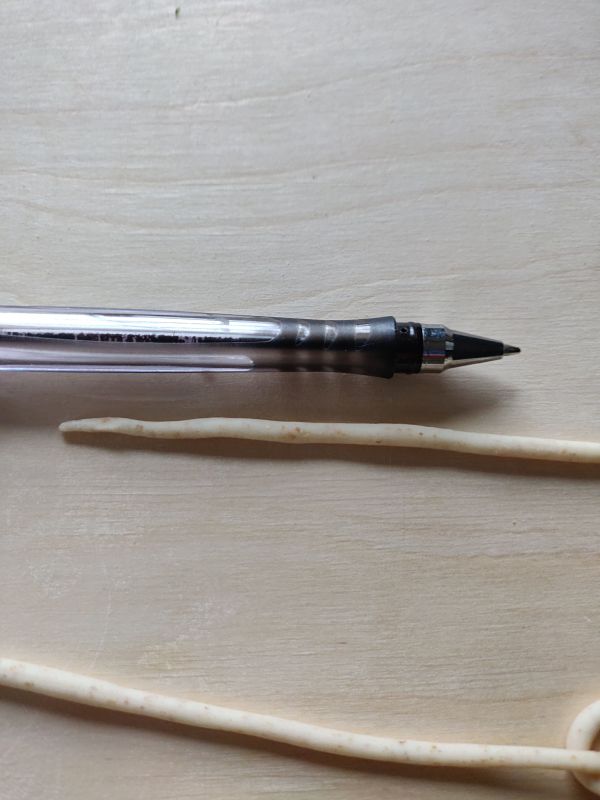
Pici, pinzi, umbricelli, strangozzi, lunghetti, ciriole, serpentelli, different names for the same pasta: very long and chubby spaghetti-like tubes of fresh pasta generally made only with flour and water, typical of Toscana, Umbria and Lazio. When cooked, they acquire that pleasant, slightly chewy and slippery texture of all “pasta povera”, that is pasta made without eggs. Continue reading “Pici, pinzi, umbricelli, strangozzi, lunghetti, ciriole, serpentelli: an eggless pasta from central Italy”