Butternut squash tripe-style, i.e. in a tomato, pecorino and mint sauce, from Sardinia – Zucca alla sarda, con pecorino e menta, alla moda della trippa – Crocoriga usu trippa

Don’t be fooled by the title – this recipe is actually meatless. I do not know much about Sardinian food and cookery, but whenever I browse through books on the subject, I am surprised by how often (and how creatively) mint comes up in recipes – a herb not generally associated with Italian cooking. This recipe makes the point and it has become a favourite. It is modelled on the way tripe is often cooked in Sardinia, with tomato sauce, mint and sharp pecorino, but with butternut squash taking the lead role.

Read more: Butternut squash tripe-style, i.e. in a tomato, pecorino and mint sauce, from Sardinia – Zucca alla sarda, con pecorino e menta, alla moda della trippa – Crocoriga usu trippa

Mint can be bossy and it is here kept in place by two equally strong flavours: peperoncino and pecorino cheese. They all play big, loud sisters to the quiet butternut squash, which, nonetheless, manages to retain its sweet identity. An excellent, beguiling dish based on contrasts and yet very harmonious. A discovery.

3-4 portions

600g butternut squash, peeled and sliced into half cm slices (net weight)
One large clove of garlic, finely chopped
A generous pinch of peperoncino
1 x 400g can of crushed tomatoes, plus half its volume in water
50g grated, aged pecorino, plus extra at the table
2-3 tablespoons chopped fresh mint leaves

Shallow fry the butternut squash in olive oil. Cook the slices until tender but still holding their shape (because they will undergo further cooking). 
Drain on kitchen paper and salt them.
If there is still a lot of oil left in the pan, remove it bar a couple of tablespoons, otherwise add some. 
Add the garlic, the peperoncino and stir, watching them with an eagle eye because the pan will be hot and the risk of burning the garlic is high.
When the oil is fragrant and garlicky (which will happen almost immediately), add the tomatoes and the water. Stir and salt lightly: you will add salty pecorino later on, hence go easy.
Simmer uncovered for ten minutes.
Add the pumpkin and simmer for about extra five minutes, turning the slices in the sauce: some will break up and that’ s fine.
Add the pecorino and the mint and stir again, as gently as possible.
Rest for 5 minutes and serve, passing extra cheese at the table.

The dish can be made in advance, but it will thicken as it sits: add some water to bring  it back to a looser consistency, when you reheat it.

Notes

Ideally you want a sharp, crumbly Sardinian or Tuscan pecorino, but pecorino romano works too and this is easier to find here in the uk.

According to my Sardinian friend and great chef Andrea, this dish works well also without the cheese.

Non traditional as it is, I might be tempted to add, just prior to serving, some coarse, crisp breadcrumbs, fried in oil.

Caponata di zucca (Sicilian sour-sweet butternut squash caponata)

Sicilian caponata di melanzane is very famous, however it is not the only one. In fact, on a trip to Sicily and after reading the seminal “Profumi di Sicilia” by Giuseppe Coria,  I learnt that “caponata” is only a generic term used to describe a dish made of assorted cooked vegetables finished off with a sour sweet condiment, either sugar or honey and vinegar. Continue reading “Caponata di zucca (Sicilian sour-sweet butternut squash caponata)”

Pomodorini scattarisciati – crackling cherry tomatoes (Puglia)

Update: summer 2022, Lucca: with top Italian pomodorini this dish is even more spectacular. I noticed they improve after a good rest, i.e. the day after they were even better.

Original version:
It is now summer, or at least this is what the calendar says; it has been raining for days here in London and the sky is grey, an elegant pearly shade of grey, but grey nonetheless. Not fun. To raise my endorphins, I decided to make this Apulian tomato sauce, pomodorini scattarisciati, literally crackling tomatoes (in the local dialect) — vibrant, intensely tomatoey and uplifting.

The cherry tomatoes are fried in a rather indecent amount of oil, on high heat,  uncovered until they start bursting. Continue reading “Pomodorini scattarisciati – crackling cherry tomatoes (Puglia)”

Torta di farro della Garfagnana (emmer savoury pie from Garfagnana)

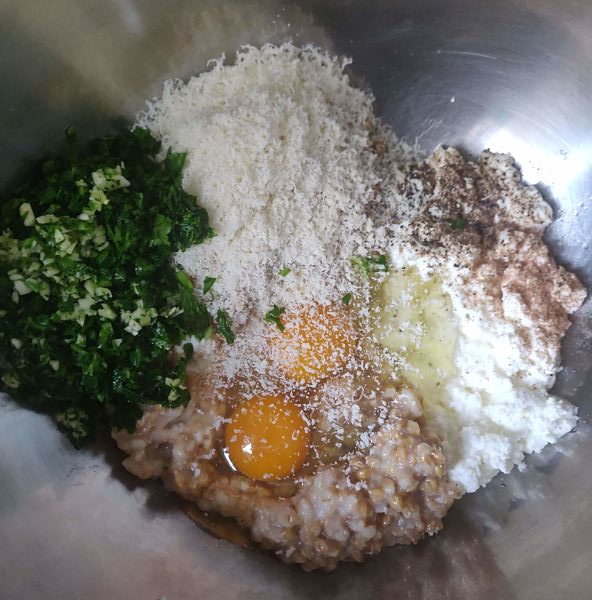
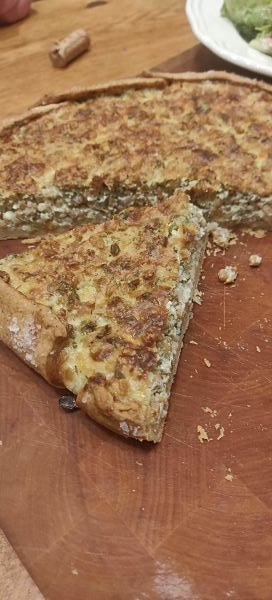
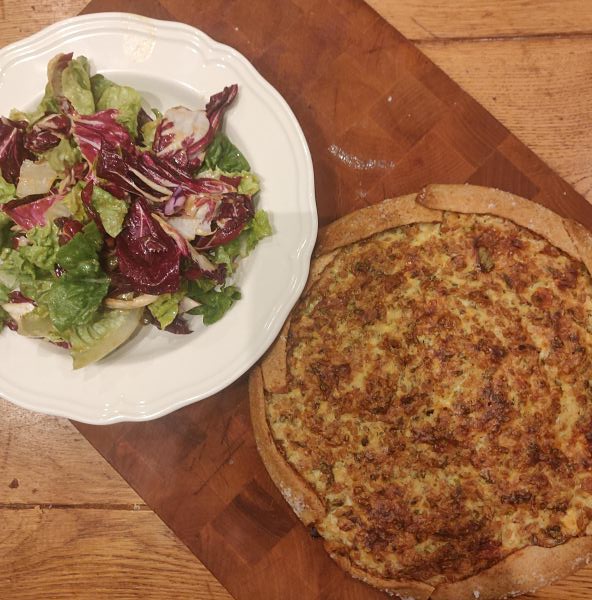
A savoury pie typical of Garfagnana and Lunigiana, those mountainous areas in between North Tuscany, South Liguria and west Emilia Romagna, sparsely populated, traditionally poor (hence their rather sombre style of cooking), thickly covered in chestnut tree woods (hence the many dishes based on chestnuts, once called “the bread of the poor”, because they were free and highly nutritious) and where mushrooms and wild boars are still abundant. It is farro, however, or emmer (Triticum dicoccum), a type of wheat, that is perhaps the most celebrated produce of this part of Italy.

Continue reading “Torta di farro della Garfagnana (emmer savoury pie from Garfagnana)”

Focaccia di Recco (focaccia with cheese, from Recco, Liguria)

As a teenager, I used to go skiing in the Alps, in Valle d’Aosta, the austere north-western part of Italy, crowned by dramatic peaks. On a sunny, crisp, late winter day, coming down the slopes was exhilarating. And exhausting after a few hours of fun. By late lunch, I was starving. We would generally find a safe spot and have a picnic – a slab of focaccia, stuffed with ham or mortadella, a coke and some chocolate. The local alimentari down in the village used to sell a great focaccia and I indulged often. I have never come across a bakery or alimentari in Italy that does not sell focaccia, though not perhaps always as good as the one I used to buy up there in the mountains. Now that I think of it, this is a little curious, because focaccia is actually specific to Liguria, in the north-west of Italy, but it has become a national food in the past few decades.

It is only in Liguria, however, that I have come across the lesser known focaccia d Recco, which is not a focaccia in the conventional meaning, but a flat bread, stuffed with cream cheese.

Continue reading “Focaccia di Recco (focaccia with cheese, from Recco, Liguria)”