December 2025
“Oh! What a dreadful illness hunger is!” exclaims Pinocchio in the fifth chapter of his adventures. At the beginning of the chapter we find the wooden puppet desperate from the pangs of hunger, finally aware of how hard it is to be alone in the world, without a family. Suddenly, however, his troubles seem at an end. In the middle of a heap of rubbish he catches sight of a beautiful white egg and begins to fantasise about how he might cook it: as a frittata? fried?
Alas, Pinocchio’s happiness lasts only for a moment. When he cracks the egg open: “…instead of white and yolk there sprang out a lively, well-mannered little chick, which, making a fine bow, said:
— A thousand thanks, Mr. Pinocchio, for sparing me the trouble of breaking the shell! Goodbye, take care, and my regards to everyone at home! —
Having said this, it spread its wings and, slipping through the open window, flew off and disappeared from sight.”
Pinocchio is left empty-handed, his stomach growling louder than before.
A pity, because an egg can satisfy an empty stomach quicker than you can say Carlo Collodi. And if one has a couple of eggs per person, along with a few other staple ingredients, then a feast is on the cards.
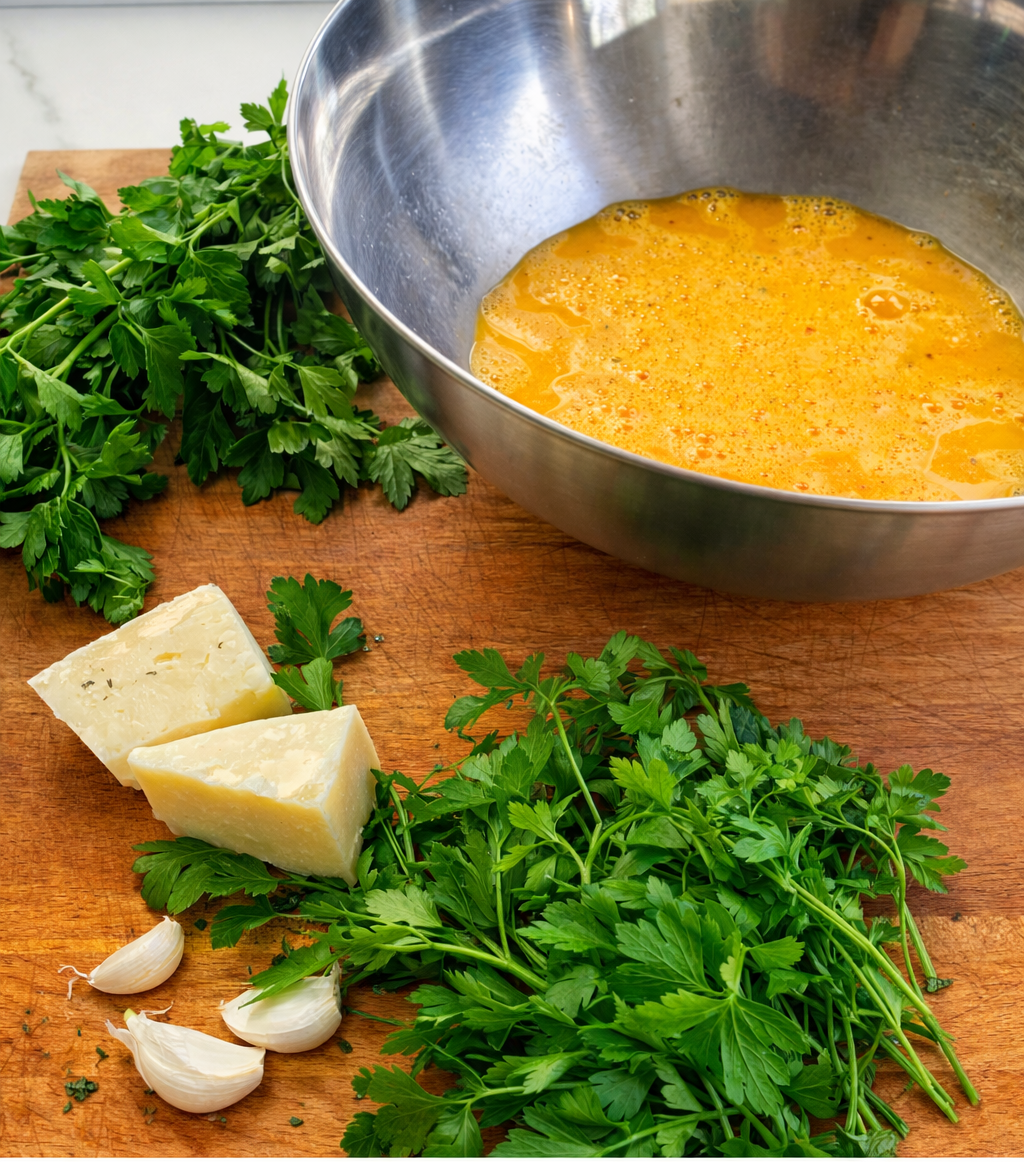
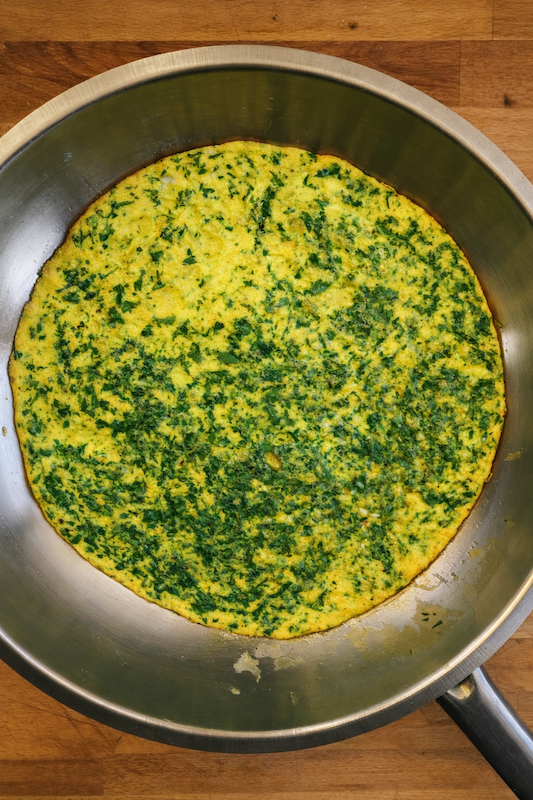
Take this frittata, for example. One must set aside all scepticism and have faith when preparing it. You start as usual, whisking the eggs together, then you add chopped parsley, garlic and a fistful of pecorino: from a familiar – some might say mundane –dish, you land on something rather delicious.
It is an assertive frittata (that garlic left almost raw, the abundance of pecorino), and it leaves a mark — especially when stuffed still warm into a panino.
The recipe is, of course, elementary: beaten eggs (five for two or three people), a small handful of chopped parsley, one clove of garlic mashed to a paste, and a generous fistful of grated pecorino.
The lot is poured into a large, non-stick pre-heated pan, generously coated with oil. The frittata cooks on a low flame, covered, until the surface is almost entirely set. A brief pass under the grill completes this cooking marathon.
Three observations:
First, be generous with the oil – it makes the frittata softer and tastier.
Second, to beat or not to beat? Eggs for a frittata should be beaten with a light hand. The aim is to break the yolks and mix them with the whites, nothing more. If you beat them too vigorously, you incorporate air and the texture of the frittata changes: you end up with a frittata with pretensions of being a soufflé — which is not what we want.
Third, that acrobatic manoeuvre of flipping the frittata using pot lids, large plates, and the like is not for me. If you do not have a grill, you can simply leave the frittata covered, turn off the heat, and let it rest for about ten minutes.
___________________________________________________________________________________
«Oh! che brutta malattia che è la fame!» esclama Pinocchio nel quinto capitolo delle sue avventure. Ne ha già combinate di tutti i colori: per colpa sua Geppetto è finito in gattabuia e lui stesso ha ammazzato il Grillo Parlante. All’inizio del capitolo troviamo il povero burattino disperato per i morsi della fame, finalmente consapevole di quanto sia difficile essere soli, senza una famiglia. All’improvviso, però, i suoi guai sembrano svanire. In mezzo a un mucchio di spazzatura scorge un bell’ uovo bianco e, incapace di contenersi, comincia a fantasticare su come potrebbe cucinarlo: al piatto? a frittata? fritto? La felicita’ del burattino dura solo un attimo pero’. Quando rompe l’uovo:
«… invece della chiara e del torlo scappò fuori un pulcino tutto allegro e complimentoso, il quale, facendo una bella riverenza, disse:
— Mille grazie, signor Pinocchio, d’avermi risparmiata la fatica di rompere il guscio! Arrivedella, stia bene e tanti saluti a casa! —
Ciò detto, distese le ali e, infilata la finestra che era aperta, se ne volò via a perdita d’occhio.»
Pinocchio resta con un palmo di naso e lo stomaco che brontola più forte di prima.
Peccato, perché un uovo, quando si ha fame, risolve davvero molte cose. E se poi di uova se ne hanno un paio a testa, con qualche altro ingrediente non troppo dispendioso, ci si mangia da re.
Prendete questa frittata, ad esempio. Bisogna accantonare ogni scetticismo e avere fede, quando la si prepara. Alla base di uova sbattute, si aggiungono prezzemolo, aglio e pecorino e da un piatto elementare si arriva ad un risultato infinitamente superiore.
E’ una frittata sfrontata (quell’aglio che rimane appen appena cotto, la presenza ruvida del pecorino), ma lascia il segno, soprattutto se mangiata tiepida in un panino.
La (non) ricetta e’ovviamente semplicissima: uova sbattute (5 per due o tre persone), una piccola manciata di prezzemolo tritato, uno spicchio d’aglio ridotto a crema e un bel pugno di pecorino grattugiato. Si procede poi con la cottura solita: una larga padella antiaderente sul fuoco, un velo di olio quando la pentola e’ caldissima, si versa il composto, si abbassa la fiamma al minimo e si cuoce la frittata, coperta, finche’ la superficie non risulta quasi interamente rappreso. Un brevissimo passaggio al grill a completare la cottura
Tre precisazioni.
Sull’olio: confesso di usarne in abbondanza, quel tanto che basta a velare il fondo della padella. L’olio rende la frittata più morbida e più buona.
Sbattere o non sbattere? Le uova per una frittata vanno sbattute con mano leggera. Lo scopo è di rompere i tuorli e mischiarli agli albumi, punto. Se sbattete molto energicamente invece, incorporata aria e la consistenza della frittata cambia: otterrete una frittata con velleità di soufle’, che non e’ il nostro scopo.
Sulla cottura: quell’acrobazia di girare la frittata usando coperchi di pentole, piatti grandi ecc… non fa per me. Se non avete il grill, potete semplicemente lasciare la frittata coperta, spegnendo la fiamma e lasciandola riposare per 10 minuti circa.

 Italian home cooking
Most excellent – thank you and happy new year Arturo!
LikeLike
Grazie mille. A volte la semplicità è proprio ciò che serve. La preparerò stasera!
LikeLike
Brilliant and so simple!
LikeLike